Why water heaters die early in Phoenix
Hard water, scale, and the two maintenance items that add years to a tank.
· 3 min read · Judai Brothers
A water heater is generally rated for about ten years. In the valley a lot of them don’t see eight, and it usually isn’t because the heater was cheap.
What hard water actually is
Dissolved calcium and magnesium, picked up on the way here. Phoenix-metro water is hard by any measure. Exactly how hard depends on your city and your source, and we’re not going to quote you a number — the figures easiest to find online mostly come from companies selling softeners, and they disagree with each other by a factor of two. Your city publishes a water quality report; that’s the one to trust.
What isn’t in dispute is what heat does to it. Cold water holds those minerals in solution. Heat it and they come out — which is why the inside of a kettle furs up and the inside of your cold line largely doesn’t. Your water heater is the one appliance in the house whose entire job is heating water.
What that does to a tank
- On a gas tank, sediment settles on the bottom — directly between the burner and the water it’s meant to heat. The burner runs longer to hit the same temperature, and the steel at the bottom of the tank runs hotter than it was designed to. That’s what actually kills tanks early.
- The rumbling and popping people describe is water boiling in pockets underneath that sediment layer. It’s not a mystery noise; it’s a diagnosis.
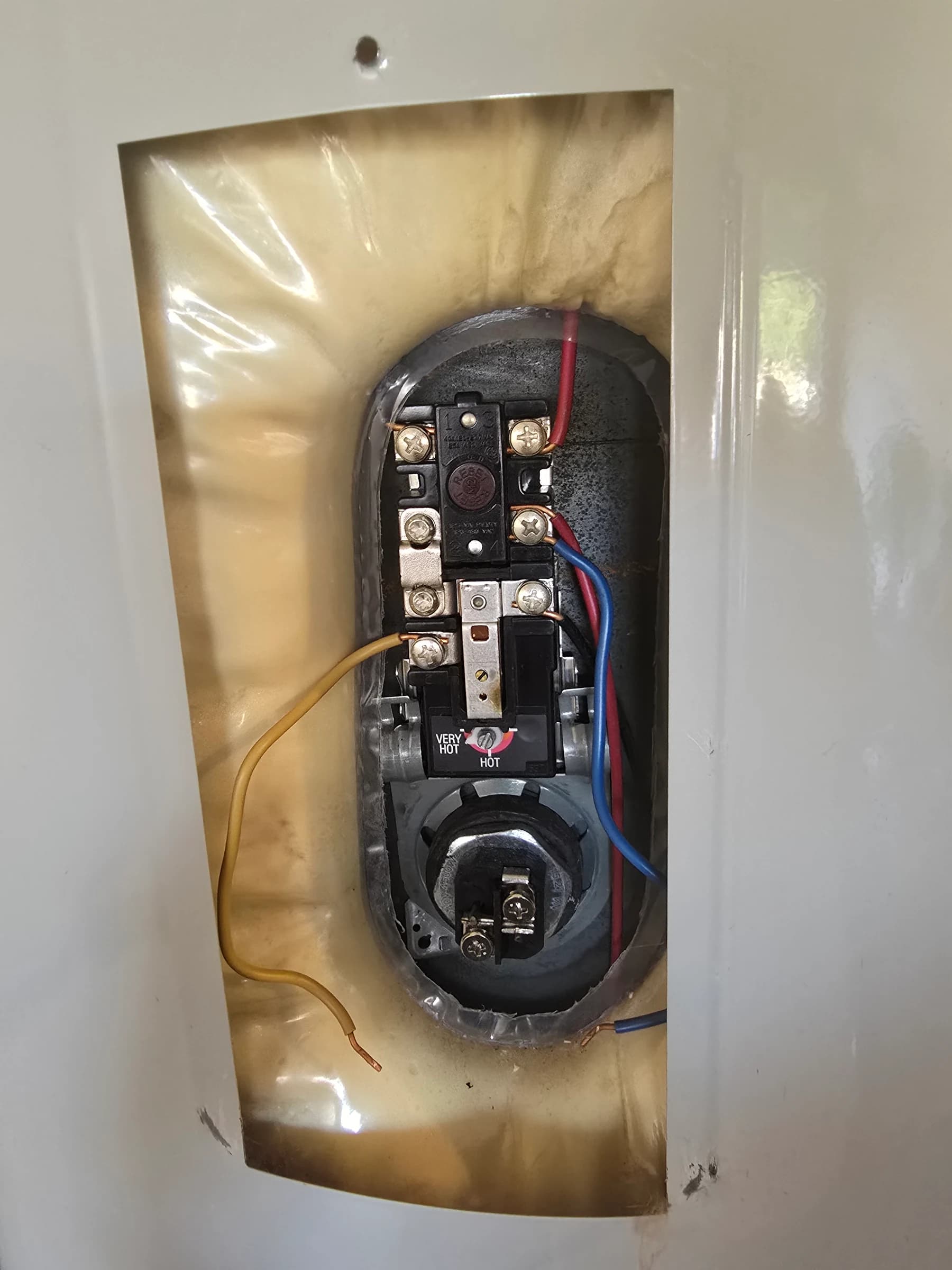
- On an electric tank, scale forms on the elements and bakes on, so they overheat and burn out. That’s the scorched element in the photo above.
- You lose capacity. Sediment takes up volume in a tank you paid to have. A 50-gallon heater with an inch of scale in the bottom isn’t a 50-gallon heater any more.
The anode rod nobody looks at
Every tank heater has a sacrificial anode rod screwed into the top — a length of magnesium or aluminium whose entire purpose is to corrode instead of the tank. It’s the cheapest insurance policy in your house, and almost nobody checks it. When it’s consumed, the tank is next in line.
If your heater is five years old and has never been touched, the anode rod is the highest-return thing on this page. Those two numbers are the whole argument.
Is flushing worth it?
On a tank, yes — once a year, and more if you’ve never had it done. Draining the sediment out puts the burner back in contact with the water and takes the heat stress off the bottom of the tank.
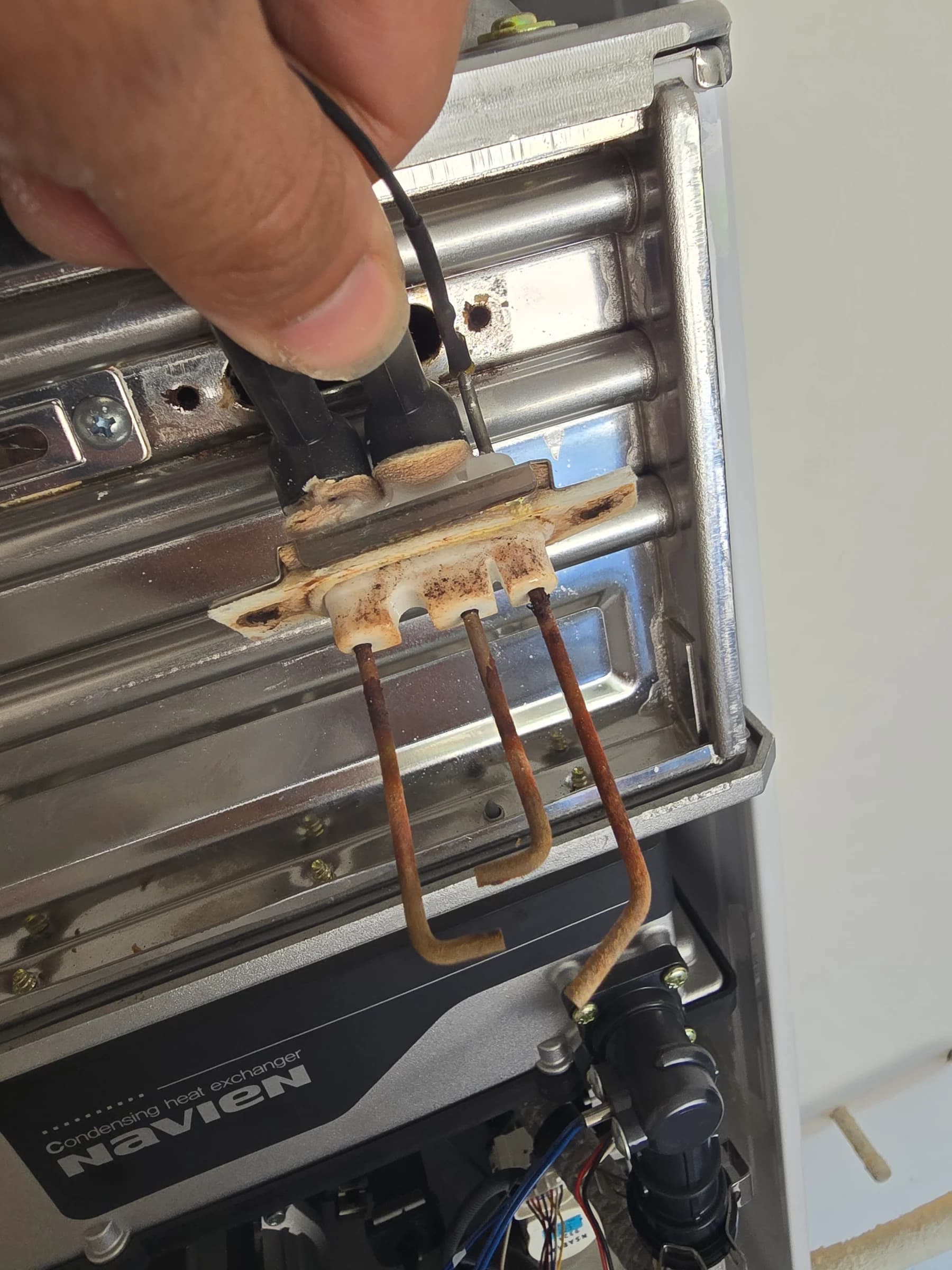
Tankless is a different problem with the same cause. There’s no tank for sediment to sit in, but there is a heat exchanger with narrow passages running very hot water through them, and scale in there chokes flow and drops efficiency fast. A tankless unit in Phoenix that has never been descaled is on borrowed time.
Fixing it upstream
Flushing and anode rods treat the symptom in one appliance. A softener treats the cause for the whole house — the heater, the fixtures, the glassware, and the shower doors all stop scaling at once. It isn’t cheap, and whether it’s worth it depends on how long you plan to be in the house, but it is the only fix that works everywhere at the same time. Prices are on the softeners and RO page.
Signs yours is on the way out
- Rumbling, popping, or crackling while it heats
- Hot water running out noticeably sooner than it used to
- Rusty or brown hot water, when the cold runs clear
- Any moisture at the base, or rust streaks down the jacket
- Ten years or more on the label
The last one on its own isn’t an emergency. Combined with any of the others, it’s worth having someone look before the choice gets made for you at 6am. Estimates are free, there’s no trip fee, and if it turns out to be a $189 rod rather than a new tank we’ll say so — book a visit or read what replacement actually costs.