Slab leaks in Phoenix: how you know, and what it costs to find
A leak in a wall leaves a stain. A leak under a slab has nowhere to go but sideways.
· 3 min read · Judai Brothers
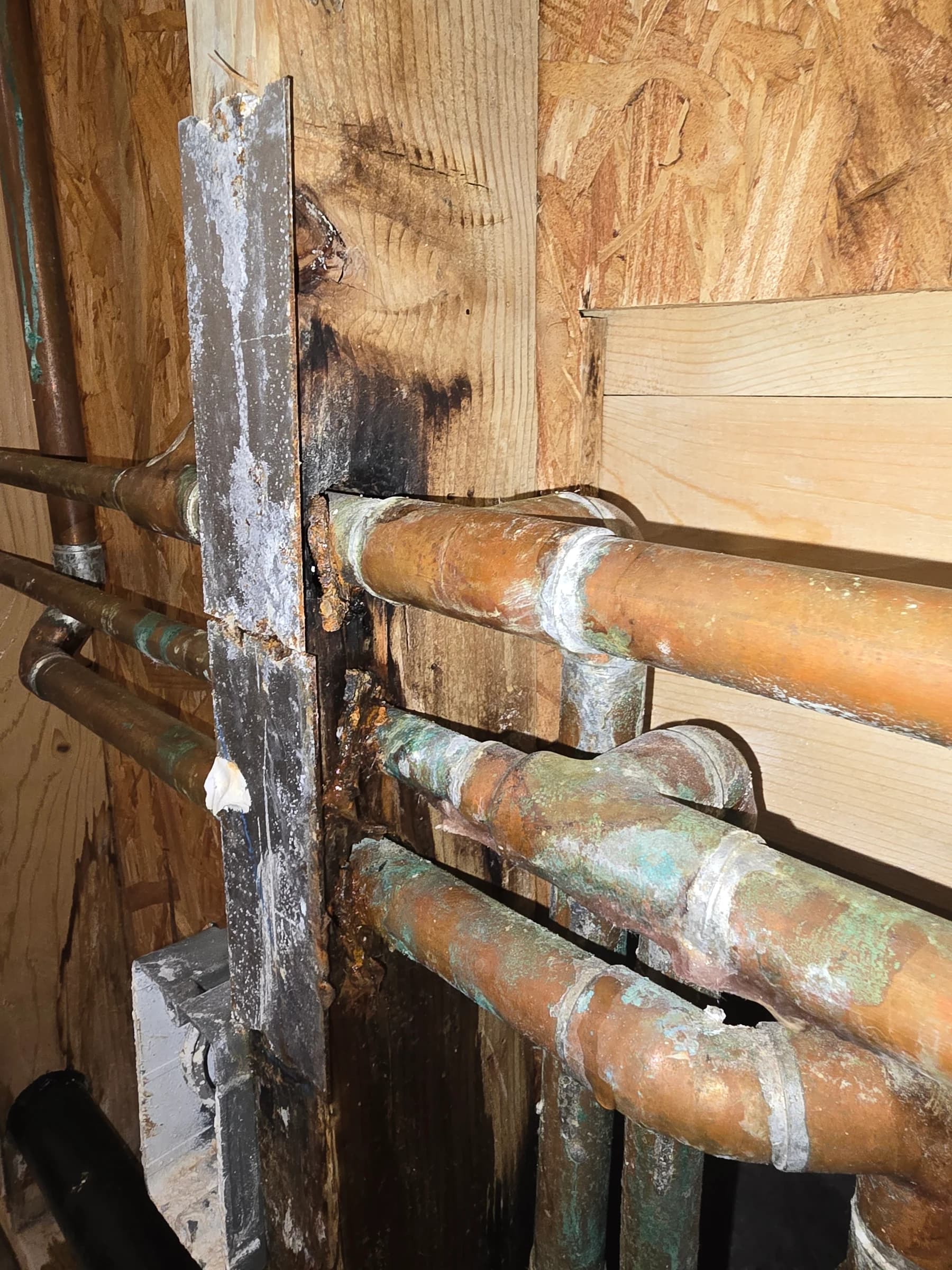
Almost nothing in the valley has a basement. Houses here sit on a concrete slab poured on grade, and in a great many of them the water lines run through or beneath that slab. It’s a perfectly sound way to build. It’s also why a leak can run for months before anybody notices.
The signs, roughly in the order people notice them
- The water bill jumps with nothing about your household having changed. This is usually the first real signal, and it’s the one most often explained away.
- You can hear water running with every fixture off. Stand still in a quiet house and listen.
- A warm patch on the floor. That’s a hot-water line, and on its own it’s close to diagnostic. Cold-line leaks don’t announce themselves this way.
- Cracks in floor tile or drywall that are new, or that have started moving.
- Pressure dropping at fixtures, or a water heater that seems to be working harder than it should.
- Damp carpet or a wet baseboard with no fixture anywhere near it.
- A mildew smell that doesn’t clear no matter how much you air the room out.
The five-minute test: turn every fixture in the house off, then go and look at your water meter. If the low-flow indicator is still creeping, water is going somewhere it shouldn’t.
Finding it is most of the job
This is the one place where our free-estimate promise needs a sentence of explanation, so here it is plainly. Estimates are free on work we can see. Finding what we can’t see is diagnostic work — it takes time and equipment, and it’s charged for.
What that buys is a location, not a guess: isolating sections of the system, testing them under pressure, and narrowing it down until we can point at a spot rather than wave at a room. Approve the repair and the fee comes off it. There’s no trip fee either way.
Post-tension slabs change the answer
A lot of newer valley tracts — much of north Peoria, Surprise, Goodyear, and the newer edges of everywhere else — sit on post-tension slabs: concrete with steel cables tensioned through it. You do not cut into one of those casually. Catching a cable turns a plumbing repair into a structural one.
So on a post-tension slab, a reroute is often the right call — abandon the failed line in place and run a new one overhead through the attic or through the walls. On a conventional slab, opening the floor at a known point can be the cheaper answer. Which is right depends on where the leak is and what you’re standing on, and that’s a decision to make after the location is known, not before.
What the repairs cost
A full reroute or a whole-house repipe is quoted rather than flat-rated, because the scope genuinely varies — that one is a free estimate. Everything else we publish is on the pricing page.
It doesn’t get better on its own
Water under a slab softens the ground the slab is resting on. Left long enough, a plumbing problem becomes a settling problem, and the flooring above it becomes a flooring problem. The repair only ever gets more expensive from here, and the diagnostic that finds it is the cheapest part of the whole exercise.
If two or three things on the list above sound like your house, book a visit or call. More detail on the leak detection page.