“Flushable” wipes and your sewer line
They go down. That is the only part of the claim that’s true.
· 3 min read · Judai Brothers
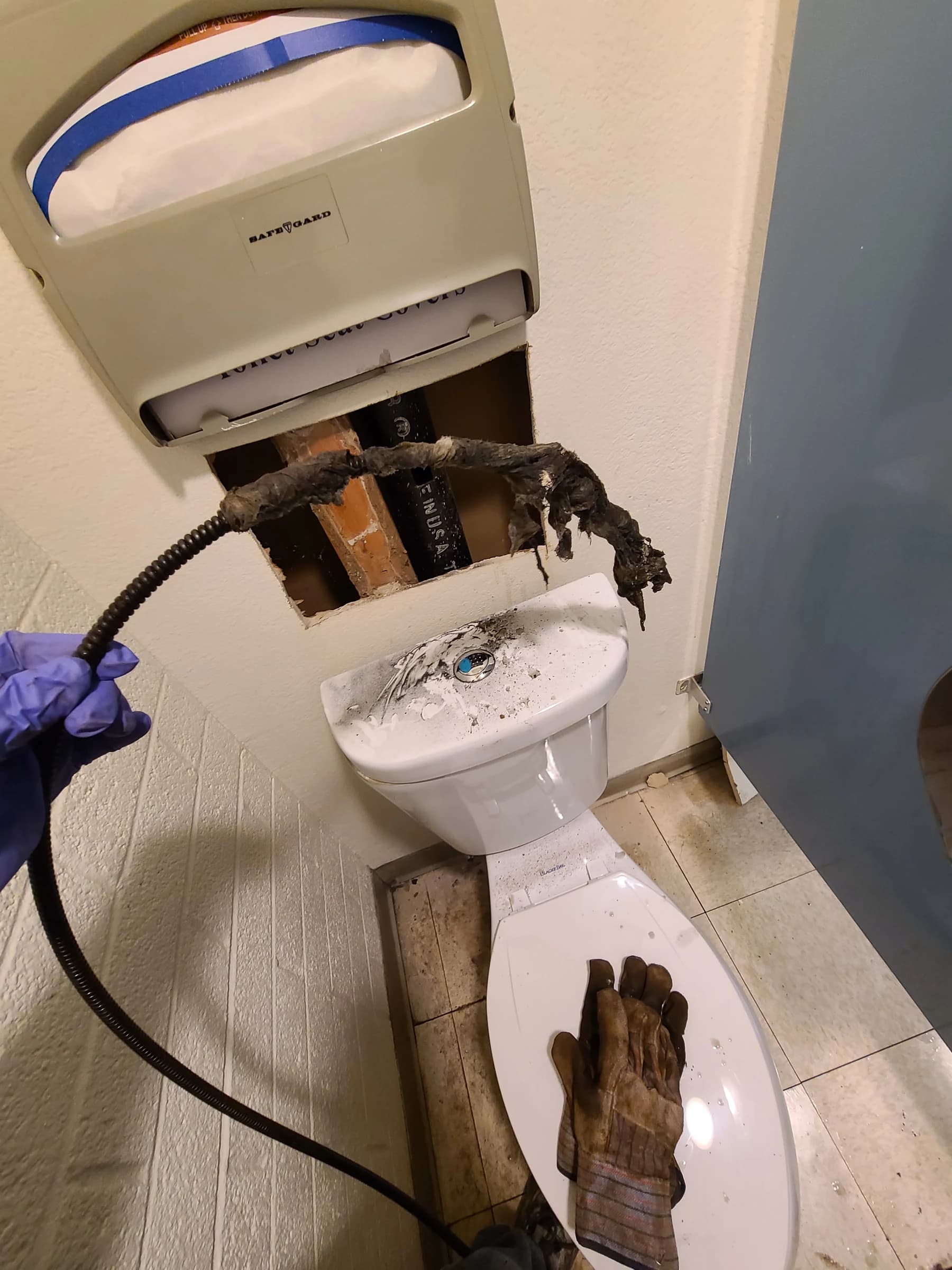
The word on the packet is doing a lot of work. Flushable means it will go down the toilet. It does not mean it goes away.
Toilet paper is engineered to fall apart. A wipe is engineered not to.
That’s the whole design brief for a wipe — hold together when wet, don’t shred in your hand. Toilet paper does the opposite on purpose, breaking down in water in seconds to minutes. The two things behave nothing alike once they’re out of sight.
So the wipe flushes fine. Then sixty feet down the line it reaches the first place the pipe bellies, or a root has come through a joint, or the bore has gone rough with scale — and it catches. The next one catches on that one. Grease from the kitchen sink binds the pile together. Weeks later, the toilet backs up and it looks sudden.
What else doesn’t belong down there
- Wipes of any description — baby wipes, cleaning wipes, and the ones marked flushable
- Paper towels and facial tissue, which are also built to hold together wet
- Cotton pads and cotton buds
- Dental floss — it’s a net, and it catches everything else
- Cat litter, including the flushable kind
- Feminine hygiene products
- Cooking grease down the kitchen sink, which cools and coats the pipe wall the whole way along
The list of what does belong is two items long: human waste and toilet paper.
What it costs to clear
Snake, camera, or jetter
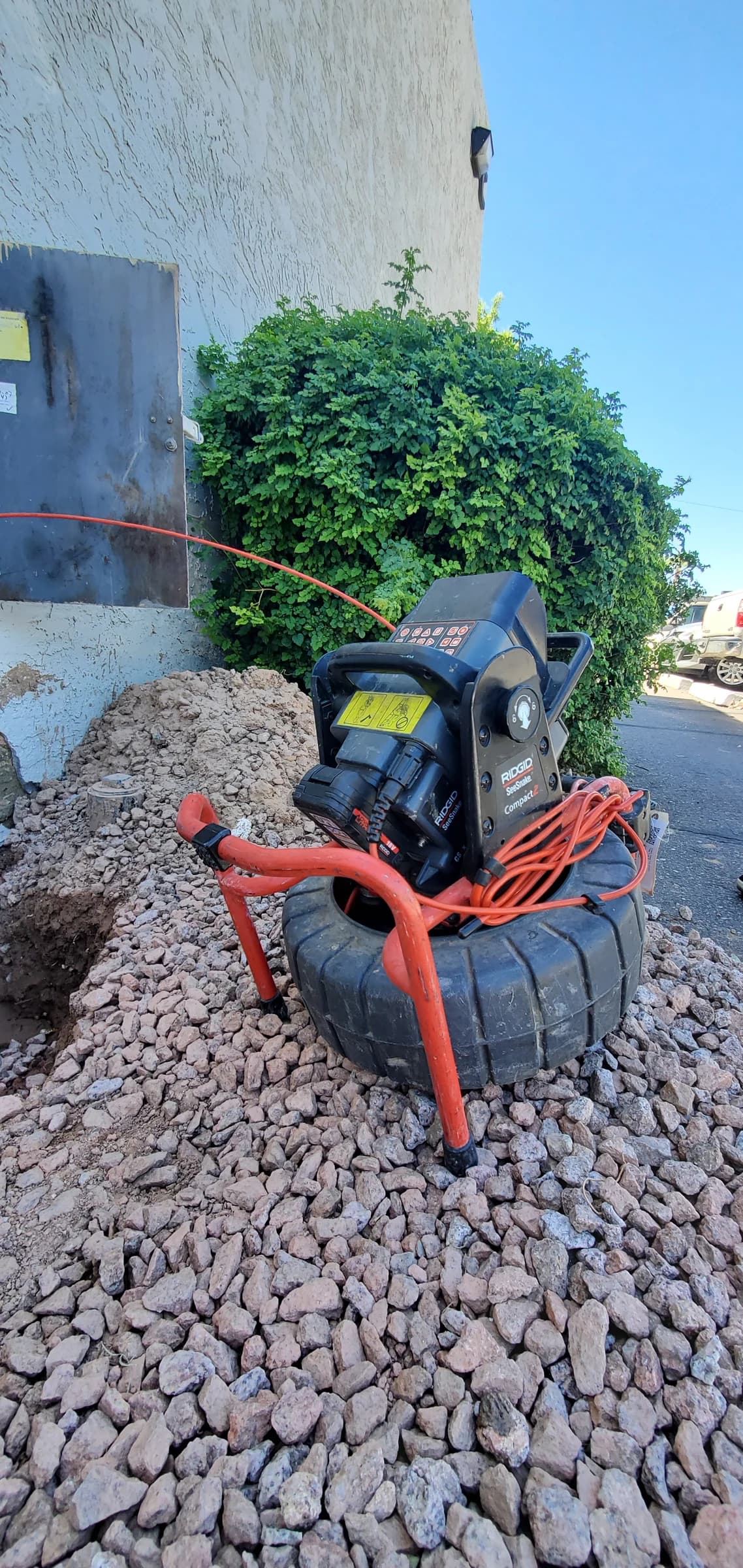
A cable machine punches a hole through the blockage and gets you running again. For a one-off, that’s the right tool and the cheapest answer. But if a line clogs twice in a year, the snake is treating a symptom — something in that pipe is catching things, and a hole through the middle of it doesn’t change that.
That’s what the camera is for. It’s the cheapest thing on the list, and you watch the footage with us. Roots at a joint, a belly holding water, a cracked section, and thirty years of build-up all look completely different on screen, and they have completely different answers.
The jetter is the fix when the pipe itself has closed up. High-pressure water scours the wall back toward full bore instead of drilling through the middle of the blockage, which is why it costs more and why it lasts.
The part that’s specific to here
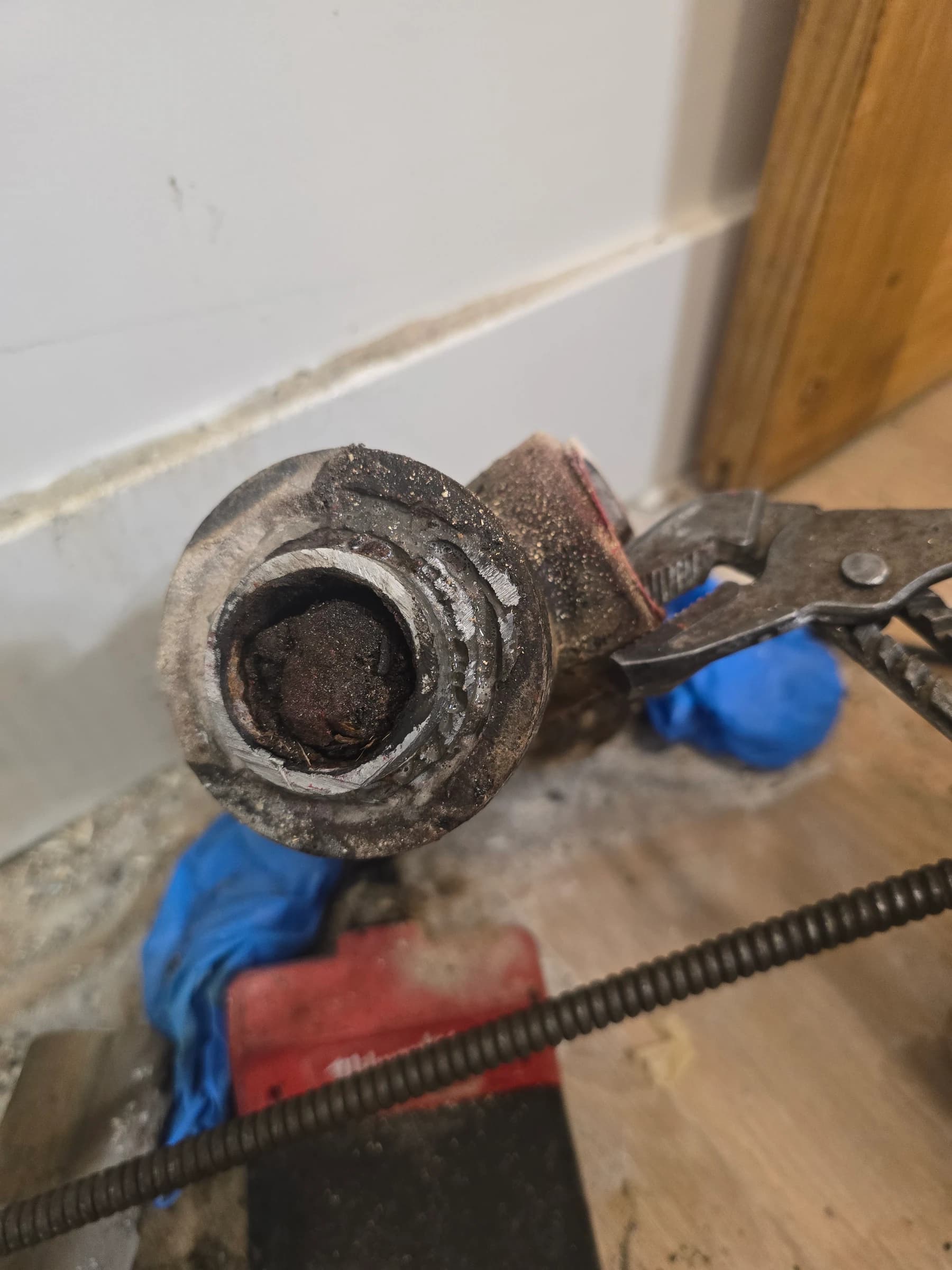
Much of the valley’s pre-1980 housing still runs on cast iron waste lines — older parts of Phoenix and Glendale, Peoria south of Bell Road, and a lot of Sun City. Fifty years of scale is the picture above. Those lines don’t have much tolerance left for anything that doesn’t dissolve.
And there are no basements here. Homes sit on slab, so the main runs underneath it — which means you don’t get the early warning a basement drip would give you. The first sign is usually the lowest fixture in the house backing up.
When it’s already backing up
- Stop running water anywhere in the house. Every gallon you send down has to go somewhere, and right now it’s coming back.
- If more than one fixture is affected, it’s the main, not the fixture. A single slow sink is a local problem; a toilet that backs up when the washing machine drains is not.
- Find your cleanout if you can — a capped pipe outside, usually near the house on the sewer side. Knowing where it is saves time when someone arrives.
- Don’t pour chemical drain cleaner in and wait. It rarely shifts a real blockage, it’s dangerous for whoever opens that line next, and it’s hard on older pipe.
Then call. We answer emergencies 24 hours and there’s no after-hours charge — a 2am callout costs the same as a Tuesday morning. Full prices are on the drain cleaning page.