The first five minutes of a plumbing emergency
Read this on a calm day. That is the entire point of it.
· 3 min read · Judai Brothers
Everything below takes ten minutes to do once, on a Saturday, when nothing is wrong. Doing it then is worth more than reading it while water is moving.
1. Find your main shut-off. Today.
In a Phoenix-area home it’s almost always one of two places, and rarely inside the house — no basements here.
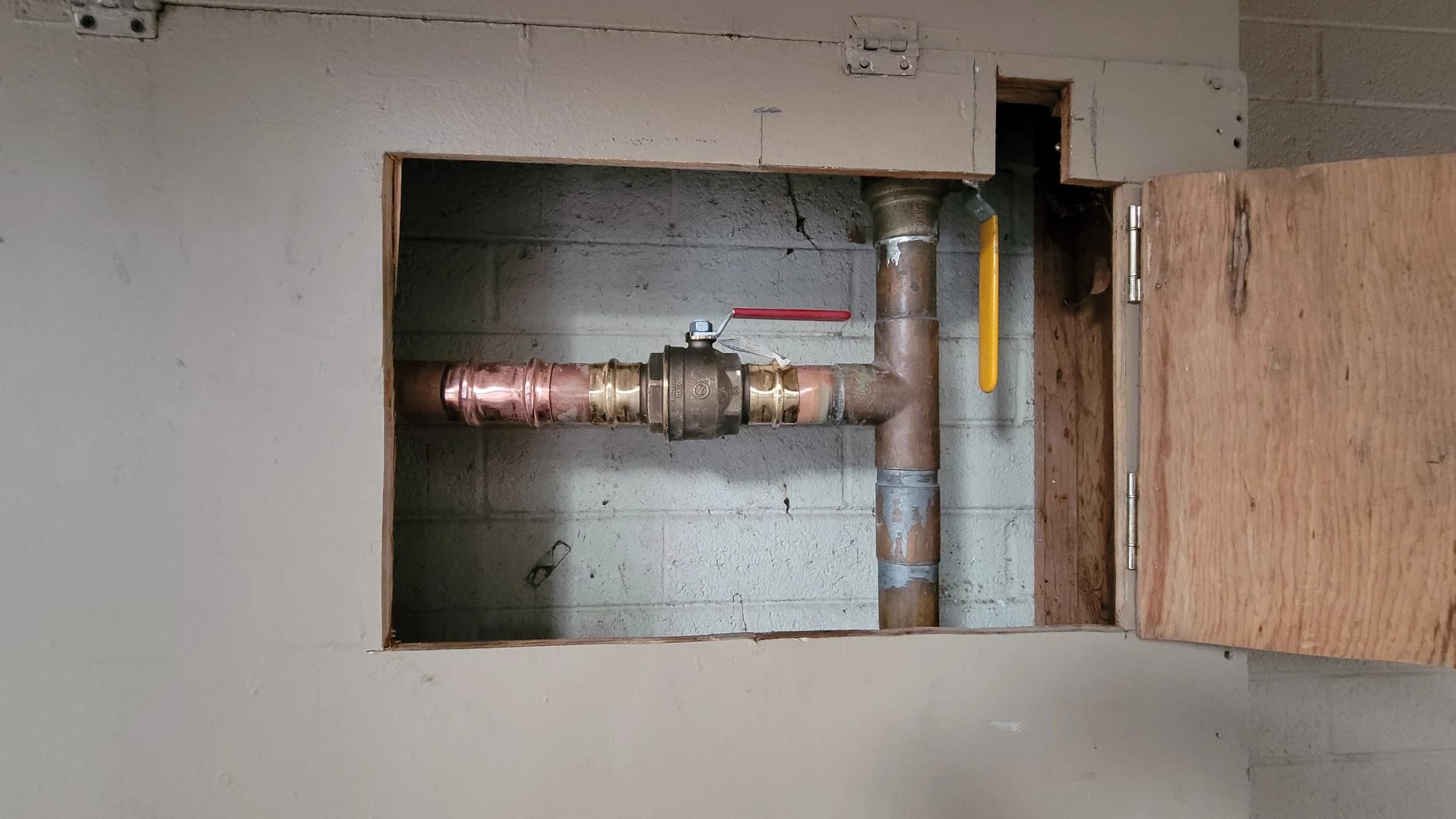
- At the riser. The exposed pipe coming up out of the ground against an outside wall, often near a hose bibb and sometimes in a small box. There’s a valve on it.
- At the meter, in a lidded box in the ground near the sidewalk or the front of the lot.
Go and find yours, and then turn it. Actually turn it. An old gate valve that hasn’t moved in fifteen years will often seize solid, and two in the morning with water spreading across the tile is a bad moment to discover that.
2. Shut off the smallest thing that stops the water
- Toilet overflowing — the oval valve on the wall behind it, usually on the right. Clockwise to close. If it won’t budge, take the tank lid off and lift the float; that stops it filling while you deal with the valve.
- Under a sink — the angle stops on the wall inside the cabinet, one for hot and one for cold.
- Water heater leaking — close the cold inlet valve at the top of the heater, then cut its power: the breaker for an electric unit, or the gas control to OFF for gas. Never leave an electric element energised in a tank that’s draining.
- Anything you can’t isolate — the main, from step 1.
3. Then, in this order
- Kill the power to the area at the breaker if water is anywhere near outlets, cords, or the panel. This is the part of a plumbing emergency that actually hurts people.
- Move what you can lift. Cardboard on a wet floor stops being cardboard, and a rug you rescue in minute four doesn’t become a claim in week two.
- Photograph everything before you clean up. Insurance will ask, and the photos you wish you had are always the ones from before.
- Get air moving. In a Phoenix August, a wet floor in a closed-up house is a mould problem inside two days. Fans on, windows open if it’s cooler out than in.
What not to do
- Don’t pour chemical drain cleaner down and wait. It rarely shifts a real blockage, it’s genuinely dangerous for whoever opens that line next, and it’s hard on older pipe.
- Don’t keep flushing to see if it’s cleared. If it didn’t clear the first time, the second attempt is just more water on your floor.
- Don’t run the disposal to push a kitchen backup through. You’re pushing into a line that’s already full.
- Don’t wait for morning to stop the water because you’re worried about an after-hours charge. Ours is zero, and we’d rather answer the phone than come out to a bigger job.
Then call — don’t book
This is the one time our booking form is the wrong tool, and we’d rather say so than let you find out. Booking online asks you to pick an arrival window and wait up to an hour for the office to confirm it. That’s the right process for a faucet swap and the wrong one for a line that’s spraying.
Emergencies get answered on the phone, 24 hours. Nights, weekends, and holidays are billed at the same rate as a Tuesday morning — there is no after-hours premium, so nothing about calling at 3am costs you more than calling at 3pm. More on the emergency page.